How to Choose the Best Food Safety Kits for Your Needs?
In today's world, food safety is a critical issue. The right Food Safety Kits can help ensure that your food remains safe for consumption. Choosing the best kit is not always straightforward. There are many options available on the market, each tailored for different needs. Some kits focus on temperature control, while others emphasize contamination detection.
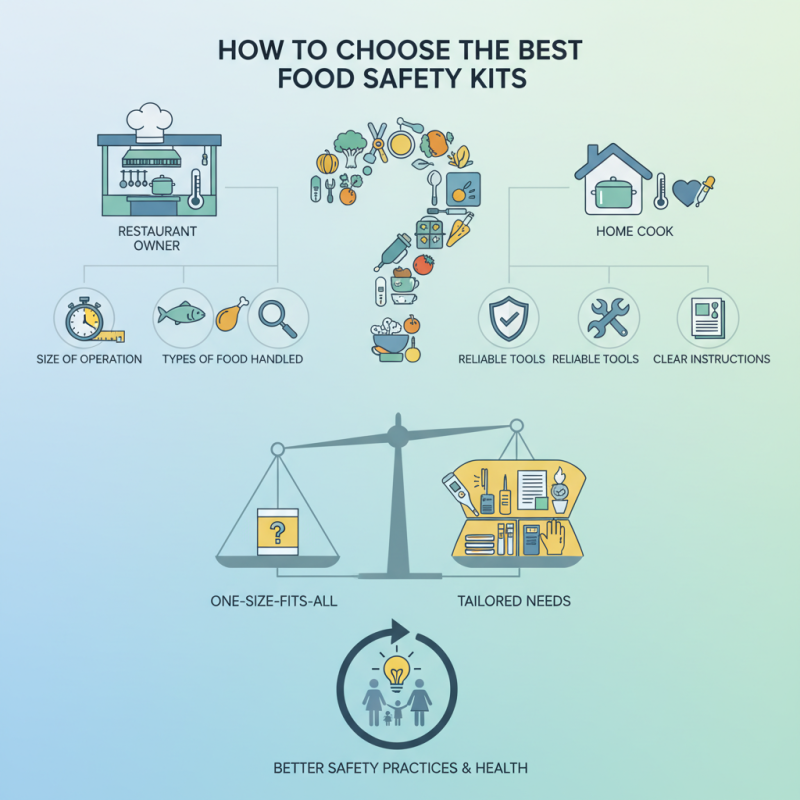
It’s essential to assess your unique requirements. Are you a restaurant owner or a home cook? Different environments require different tools. Consider factors like the size of the operation and the types of food handled. While many kits claim to be comprehensive, they often fall short in meeting specific needs. Evaluation is key to finding the right fit. Reflecting on your choices may lead to better safety practices.
Don’t settle for a one-size-fits-all. Instead, take your time to explore various kits. Look for those that provide clear instructions and reliable tools. Quality matters more than quantity when it comes to ensuring food safety. Your commitment to this area can make all the difference in protecting health.
Understanding Food Safety Kits: A Comprehensive Overview
Food safety kits are essential tools for ensuring the safety of food products. Understanding their components can greatly enhance your operations. A comprehensive overview of food safety kits reveals several critical elements. Most kits include thermometers, pH test strips, and sanitation supplies. These items help monitor food temperature and safety levels effectively.
In 2022, a report indicated that nearly 48 million Americans experience foodborne illnesses each year. This alarming number underscores the importance of reliable food safety practices. However, many businesses overlook the need for thorough training on using these kits. A survey found that only 35% of food handling staff felt adequately trained to use safety equipment. This gap creates a risk in food handling processes.
Selecting the right food safety kit can be daunting. Not every kit suits every business type. For example, restaurants require different tools compared to catering services. Assess your specific needs before making a choice. Effective monitoring can prevent contamination. Yet, relying solely on kits is not enough. Continuous assessment of food safety practices is vital. There’s always room for improvement in training and implementation.
Key Features to Look for in Food Safety Kits
When selecting food safety kits, understanding key features is essential. One critical aspect is the type of tests included. Kits should cover a range of contaminants, including bacteria, allergens, and chemical residues. According to a study by the Food Safety Authority, nearly 48 million Americans fall ill from foodborne illnesses each year. This highlights the importance of comprehensive testing.
Another vital feature is user-friendliness. Kits should include clear instructions and be easy to use. Many people feel intimidated by lab tests. A cluttered kit can lead to mistakes. According to a survey, 65% of users prefer straightforward processes when testing food safety. Ensuring clarity encourages proper usage and fosters confidence in results.
Lastly, consider the shelf life and storage requirements of the kits. Some may have long-term stability, while others can degrade quickly. Improper storage can lead to inaccurate results. Reports indicate that kits stored in unsuitable conditions can lose efficacy by up to 30%. This statistic underlines the need for mindful storage practices. Many people overlook these details, impacting their overall food safety efforts.
Assessing Your Specific Food Safety Needs
Assessing your specific food safety needs is crucial for selecting the right kits. Consider the types of food you handle daily. Different foods have varied risks. If you work with raw meat, you’ll need different tools than when dealing with canned goods. Think of the environment, too. A busy kitchen might require more frequent checks than a home setting.
Evaluate your team's skill level. Are they seasoned professionals or novices? Beginners may need simpler kits with clear instructions. Assess the frequency of your food safety checks. Daily checks require more comprehensive kits. Sometimes, the best kit is one that offers simplicity and ease of use. Don't overlook storage conditions—some items may not fit well in tight spaces.
Lastly, reflect on any past issues you've encountered. Learning from mistakes helps you avoid them in the future. Have you ever faced contamination problems? Addressing these lessons will guide you in making better choices. Pay attention to user feedback on kits as well. Every bit of insight can shape your decision and improve safety.
Comparing Different Types of Food Safety Kits
Choosing the right food safety kit can be challenging. Different kits serve various purposes. It's essential to understand the specifics of each type. Some kits focus on temperature control, while others are geared towards microbiological testing. For instance, temperature monitoring kits often use digital thermometers. According to a 2022 study, proper temperature control can reduce foodborne illnesses by up to 30%.
Microbiological test kits, on the other hand, examine food for harmful pathogens. These tests provide quick results, usually within 24 to 48 hours. A report by the Food Safety Research Institute indicated that fast detection of pathogens leads to a 40% decrease in infection rates. However, not all kits offer the same accuracy. Some users report difficulties in interpreting results.
Additionally, consider the size and ease of use of the kits. Larger kits might be cumbersome in a small kitchen. A compact option could be more suitable. Yet, smaller kits may lack essential tools. The choice often comes down to specific needs and kitchen space. Evaluating your circumstances is vital before making a decision.
How to Choose the Best Food Safety Kits for Your Needs? - Comparing Different Types of Food Safety Kits
| Kit Type | Contents | Best For | Average Price ($) |
| Basic Food Safety Kit | Thermometers, Gloves, Cleaning Supplies | Home Use | 30 |
| Restaurant Compliance Kit | Thermometers, Foodborne Illness Posters, Training Materials | Restaurants and Cafes | 150 |
| Allergen Control Kit | Allergen Testing Kits, Labels, Employee Guidelines | Food Manufacturers | 200 |
| Advanced Kitchen Safety Kit | Thermometers, pH Meters, Cleaning Supplies, Safety Training | Catering Businesses | 250 |
| Mobile Food Safety Kit | Portable Thermometers, Sanitizer, Educational Materials | Food Trucks and Pop-ups | 100 |
Budgeting for Your Food Safety Kit Purchase
When budgeting for a food safety kit, you need to assess your specific needs. Determine the types of food safety tests you require. Think about the frequency of testing and potential risks. A well-structured plan can help you avoid overspending.
Consider what essential items are required for your kit. Testing strips, thermometers, and sanitation supplies are common essentials. Each component has its price range, so be vigilant. Balancing quality and cost is important. Cheaper options might lack accuracy, while high-end kits may stretch your budget thin.
Draw up a realistic budget. Include a margin for unexpected expenses. It’s easy to underestimate costs. Keep track of your purchases and reflect on your choices. Sometimes, the most economical option is not the best fit for your situation. Evaluate your priorities and revisit your budget regularly. This will ensure you're equipped adequately without shock spending.
Food Safety Kit Costs Comparison



