How to Choose the Best FRP Pipe Machine for Your Needs?
Choosing the right frp pipe machine can significantly impact your production efficiency. The global FRP market is projected to grow at a CAGR of 5.3% from 2021 to 2028. This growth highlights the importance of selecting the best machines for your specific needs. A well-selected FRP pipe machine can save costs and improve product quality.
However, many businesses struggle with this decision. Often, they overlook key factors like machine capabilities, maintenance requirements, and production volume. Data from the Composite Market Report indicates that 70% of manufacturers regret their initial machine choice, emphasizing the importance of thorough research.
Machines vary in design and function. Some focus on high speed, while others prioritize durability. Evaluating your production goals and market demands is crucial. A misstep in choosing the right frp pipe machine can lead to wasted resources and unmet production goals. Therefore, careful consideration and reflection on your needs are essential.
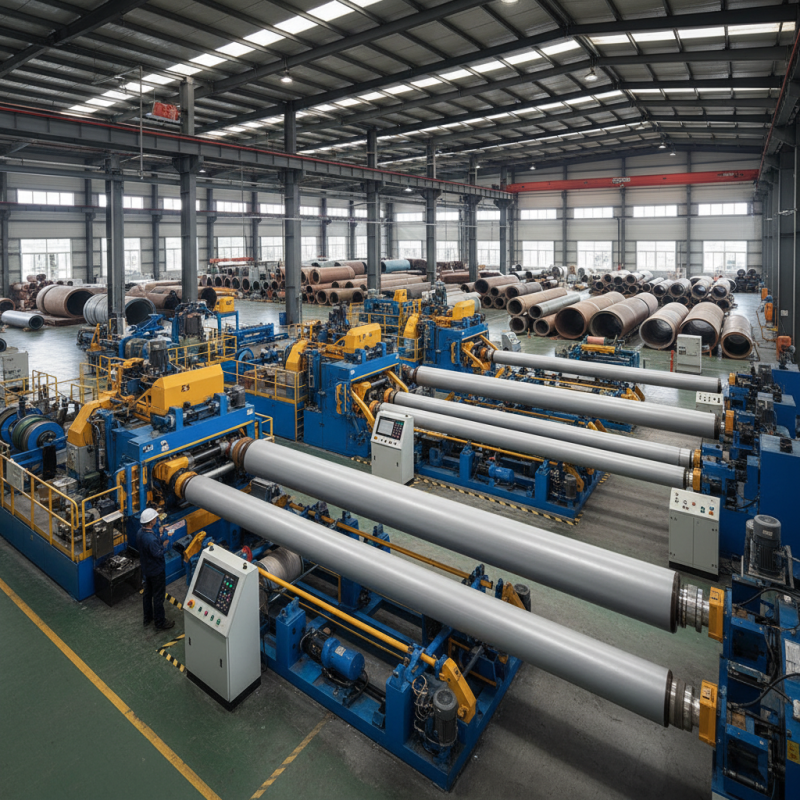
Understanding the Basics of FRP Pipes and Their Applications
FRP pipes, or fiber-reinforced polymer pipes, offer a combination of strength and lightweight design. They are resistant to corrosion, making them ideal for various applications. Industries like construction and oil and gas benefit greatly from these properties. FRP pipes are often used in waste treatment and chemical processes. Their durability makes them a preferred choice when laying down pipelines in harsh environments.
It’s important to understand the specific requirements of your project. For instance, the temperature and pressure ratings of FRP pipes can vary significantly. Not all FRP pipes will suit every application. Consider the mechanical properties and chemical exposure of your intended use. Sometimes, what seems ideal on paper may not perform well in reality. Testing under real-life conditions is often overlooked but essential.
When selecting an FRP pipe machine, evaluate its capabilities in producing custom sizes and shapes. It's necessary to ensure the machine aligns with your production goals. A machine that is too complex might lead to increased downtime. On the other hand, simpler machines may not meet the demands of larger projects. Balancing these factors can be challenging, and each decision requires careful consideration.
Key Factors to Consider When Selecting an FRP Pipe Machine
Choosing the right FRP pipe machine is crucial for efficiency and output. Consider the material compatibility. FRP pipes often use glass fibers and resins. Machines should handle various resin types to cater to your production needs. According to industry reports, around 75% of pipe production delays come from material mismatches.
When assessing machine size, think about your production scale. Bigger isn't always better. A smaller machine may suffice for niche products. Yet, too small a capacity could lead to downtime. It is estimated that over 60% of production facilities underutilize their machinery because they do not align machine size with project requirements.
**Tip:** Evaluate your projected growth. Investing in a larger machine now may save you costlier upgrades later.
Efficiency also hinges on the technology used. Automated controls can streamline operations and ensure consistent quality. A recent study indicates that automation reduces labor costs by about 30% while improving output consistency.
**Tip:** Ensure your machine allows for future technology upgrades. This flexibility can safeguard your investment.
Lastly, consider service and support. If a machine fails, delays can quickly mount. A reliable supplier can provide timely assistance. Be wary of overly complex machinery; it may bring unforeseen complications when repairs are needed.
Assessing Production Capacity and Output of FRP Pipe Machines
When selecting an FRP pipe machine, evaluating production capacity is crucial. The right machine can optimize output significantly. Current industry data indicates that a well-chosen FRP pipe machine can achieve output ranging from 100 to 500 meters per hour, depending on the specifications. This range is vital for meeting production demands effectively.
Understanding your specific needs is essential. Analyze your expected output and choose a machine that aligns with it. If you require high-volume production, focus on machines that offer advanced automation features. Consider possible constraints, such as space and workforce availability. Reportedly, 30% of companies experience inefficiencies due to misaligned capacity planning.
Tip: Always conduct a thorough review of production goals before committing. Ask for detailed specifications from manufacturers. This helps to avoid costly mistakes.
Another aspect to consider is maintenance. Machines with high output often require more upkeep. Neglecting this can lead to downtime. Some reports suggest that maintenance issues account for up to 20% of lost production time. Thus, ensuring a balance between capacity and maintainability can lead to better long-term performance.
Evaluating Material Compatibility and Machine Specifications
When evaluating material compatibility for FRP pipe machines, consider the types of resins available. Resin selection affects durability and weight. According to industry data, epoxy resins provide superior chemical resistance. This makes them suitable for aggressive environments. However, they can be more expensive. Vinyl ester resins, on the other hand, are cost-effective. They also offer good corrosion resistance in many applications.
Machine specifications are crucial. Look for machines with adjustable settings. This allows for customization based on production requirements. Speed and temperature control are essential features. A study by the Composite Materials Technology Center noted that precise temperature regulation enhances resin curing. Inadequate control can result in defects, leading to costly reworks. Also, evaluate the machinery’s ability to handle different pipe diameters. Flexibility often means better production rates.
Remember that not all machines will meet every need. Some setups may lack the necessary power for large-scale operations. Others might not provide sufficient speed for quick project turnarounds. Understanding these limitations is vital in choosing the right equipment. It's not just about choosing a machine; it’s about ensuring it aligns with your production goals.
Analyzing Cost Efficiency and ROI for FRP Pipe Production Equipment
When considering FRP pipe production, cost efficiency and ROI are critical factors. Many businesses overlook the importance of analyzing total operational costs. Evaluating energy consumption, raw material costs, and maintenance expenses can reveal hidden financial burdens. A machine's upfront price isn't everything. Long-term operational costs may surprise you.
It's important to assess the technology behind the FRP pipe machine. Some machines promise high output but can lead to inflated energy bills. A seemingly affordable option may trap you in costly repairs or require frequent part replacements. Focus on machines with durability and reliability. But challenges remain; finding the right balance between cost and efficiency often requires thorough research.
Lastly, consider potential productivity gains. A high-quality machine could improve production rates. However, if staff training is inadequate, performance may suffer. Training programs often come with costs, which can affect ROI calculations. Reflecting on your specific needs is essential. Every business has unique requirements that can affect both initial investment and long-term returns.



