What is a strong base anion resin and its applications?
strong base anion resins are vital in many industrial applications. They effectively remove anions from solutions, improving water quality. Dr. Emily Carter, a leading expert in ion exchange technology, emphasizes their importance: "Strong base anion resins are crucial in advancing purification processes." This statement reflects the growing demand for these resins in water treatment.
These resins operate by exchanging hydroxide ions for other anions. Their ability to operate under varying pH conditions makes them versatile. Industries use strong base anion resins in wastewater treatment, pharmaceuticals, and food production. The process can be complex, with various factors affecting efficiency.
However, there are challenges. Results can vary based on resin quality and operating conditions. Users must evaluate their specific needs and optimize the process carefully. As Dr. Carter points out, "Understanding your application is key to success." This highlights the necessity for thorough research and testing in achieving optimal results with strong base anion resins.
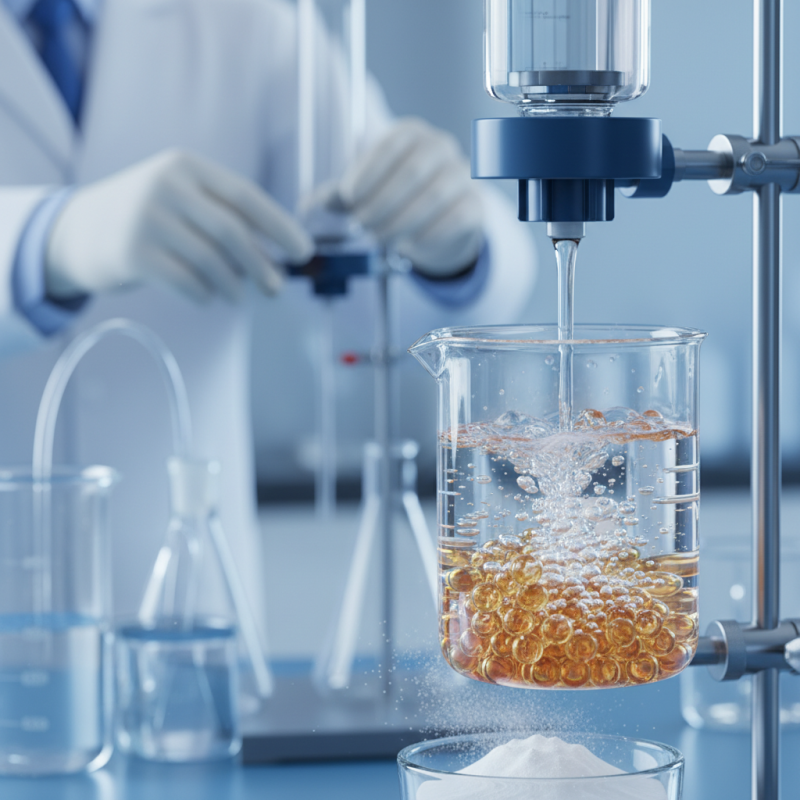
Definition of Strong Base Anion Resin
Strong base anion resins are a type of ion exchange resin used in various applications. These resins have a high capacity for exchanging anions, which makes them suitable for water purification, deionization, and chemical processing. The typical structure consists of quaternary ammonium functional groups, which interact strongly with negatively charged ions.
In industries such as pharmaceuticals and food processing, these resins play a crucial role in achieving high purity levels. According to a report by Research and Markets, the global ion exchange resin market is projected to reach $3.29 billion by 2025, driven mainly by the increasing demand for pure water.
Tips: When selecting a strong base anion resin, consider the specific ionic composition of your source water. A mismatch may hinder effective ion exchange.
These resins also face challenges. Their performance can vary based on operational conditions, such as pH and temperature. Not all strong base anion resins are efficient across the same spectrum of ions. Therefore, careful evaluation is necessary to ensure desired outcomes.
Tips: Regular monitoring of resin performance can reveal unexpected issues. Don’t overlook routine checks; they can save costs and improve efficiency.
What is a strong base anion resin and its applications?
| Property | Description |
| Definition | Strong base anion resin is a type of polymeric material used in ion exchange processes that effectively removes anions from solutions. |
| Chemical Structure | Typically composed of a cross-linked polystyrene matrix with quaternary ammonium functional groups. |
| Applications | Used in water treatment, wastewater management, and in processes for deionization or desalination. |
| Regeneration Process | Typically regenerated using strong alkaline solutions, such as sodium hydroxide. |
| Advantages | High capacity for anion removal, adaptability for various applications, and effectiveness in diverse pH levels. |
| Limitations | Can be sensitive to high concentrations of organic solvents and may require frequent regeneration. |
Chemical Composition and Structure of Strong Base Anion Resin
Strong base anion resins are critical in many industries. These resins primarily consist of highly cross-linked polystyrene matrices. They feature quaternary ammonium groups that allow for effective anion exchange. Such resins can effectively remove negatively charged ions from solutions. This property makes them essential in water treatment, chemical processing, and pharmaceutical manufacturing.
The chemical composition of strong base anion resins can significantly influence their performance. They usually contain functional groups with high capacity for ion exchange. For instance, chloride or hydroxide forms are common. A study highlighted that certain resins can achieve up to 1.2 meq/g in exchange capacity. Observing their structure, one can notice that the resin beads are uniform and stable under various conditions. However, achieving optimal performance might require careful consideration of operating conditions.
Applications of strong base anion resins are diverse. They are used in demineralization processes to remove sulfate or nitrate ions from water. In pharmaceuticals, they assist in purifying active ingredients. Despite their benefits, users must not overlook the limitations. Factors such as resin aging can impact efficiency. Regular monitoring is essential to ensure optimal ion exchange performance.
Mechanism of Action in Ion Exchange Processes
Strong base anion resins play a crucial role in ion exchange processes. These resins remove unwanted anions from solutions, such as nitrate and sulfate. They are especially effective in water treatment and chemical processing industries. The mechanism of action involves the exchange of hydroxide ions with the target anions in the solution. This exchange occurs due to the resin's positive charge, which attracts negatively charged particles.
As water passes through the resin, anions bind to its surface. The resin is then able to release hydroxide ions, which maintain charge balance. The process relies on the concentration gradient. Anions in higher concentration will displace hydroxide ions. This cycle can lead to complete removal of target ions, significantly improving water quality.
However, not all applications yield perfect results. There may be cases where certain anions resist removal. This can happen with complex mixtures in wastewater. Some operators might overlook the resin's capacity limits. Regular monitoring is essential. Ensuring optimal performance requires a delicate balance of various parameters. A deeper understanding of these processes can lead to improved efficiency and better environmental outcomes.
Strong Base Anion Resin Applications Compared
Applications in Water Treatment and Purification
Strong base anion resins are critical in water treatment and purification processes. These resins effectively remove unwanted anions from water, such as nitrates and sulfates. Their bead-like structure allows for a large surface area to interact with contaminants. This enhances their efficiency in capturing harmful substances.
In industrial applications, these resins are vital for producing high-purity water. They can regenerate several times, making them cost-effective. However, regeneration is not always straightforward. Sometimes, the output quality may fluctuate. Regular monitoring is essential to maintain effectiveness.
In residential systems, strong base anion resins help improve drinking water quality. They filter out impurities that affect taste and safety. Yet, not every household system utilizes them effectively. Some might overlook regular maintenance. This can lead to subpar performance. Proper installation and routine checks are crucial for optimal results.
Industrial Uses and Benefits of Strong Base Anion Resins
Strong base anion resins are vital in various industrial applications. These resins are effective in capturing and removing negatively charged ions from solutions. They have unique properties that make them suitable for diverse sectors, including water treatment, pharmaceuticals, and food processing.
In water treatment, strong base anion resins help purify water by removing harmful contaminants, such as nitrates and phosphates. This process ensures cleaner water for both drinking and industrial use. In pharmaceuticals, these resins play a crucial role in the production of drugs by removing impurities. Their ability to withstand high temperatures also adds to their usefulness in these applications.
Tips: When selecting a strong base anion resin, consider the specific contaminants present. The effectiveness may vary based on the type of ion targeted. Additionally, regular maintenance of the resin is essential. This can help sustain performance levels over time. Also, remember that not all resins are the same. Do your research to find one that fits your needs.



